

Introduction: Understanding the Difference Between rPET and Virgin PET
As global industries move toward a more sustainable future, recycled materials are becoming increasingly important. Among them, recycled PET (rPET) has gained significant attention as an environmentally friendly alternative to traditional virgin PET.Both rPET and virgin PET are made from polyethylene terephthalate (PET), a high-performance plastic widely used in packaging, textiles, and consumer products. However, they differ significantly in their raw materials, environmental impact, and role in building a circular economy.
For manufacturers looking to reduce carbon emissions, improve sustainability, and meet global environmental standards, choosing high-quality rPET pellets is becoming an increasingly strategic decision.
What Is Virgin PET?
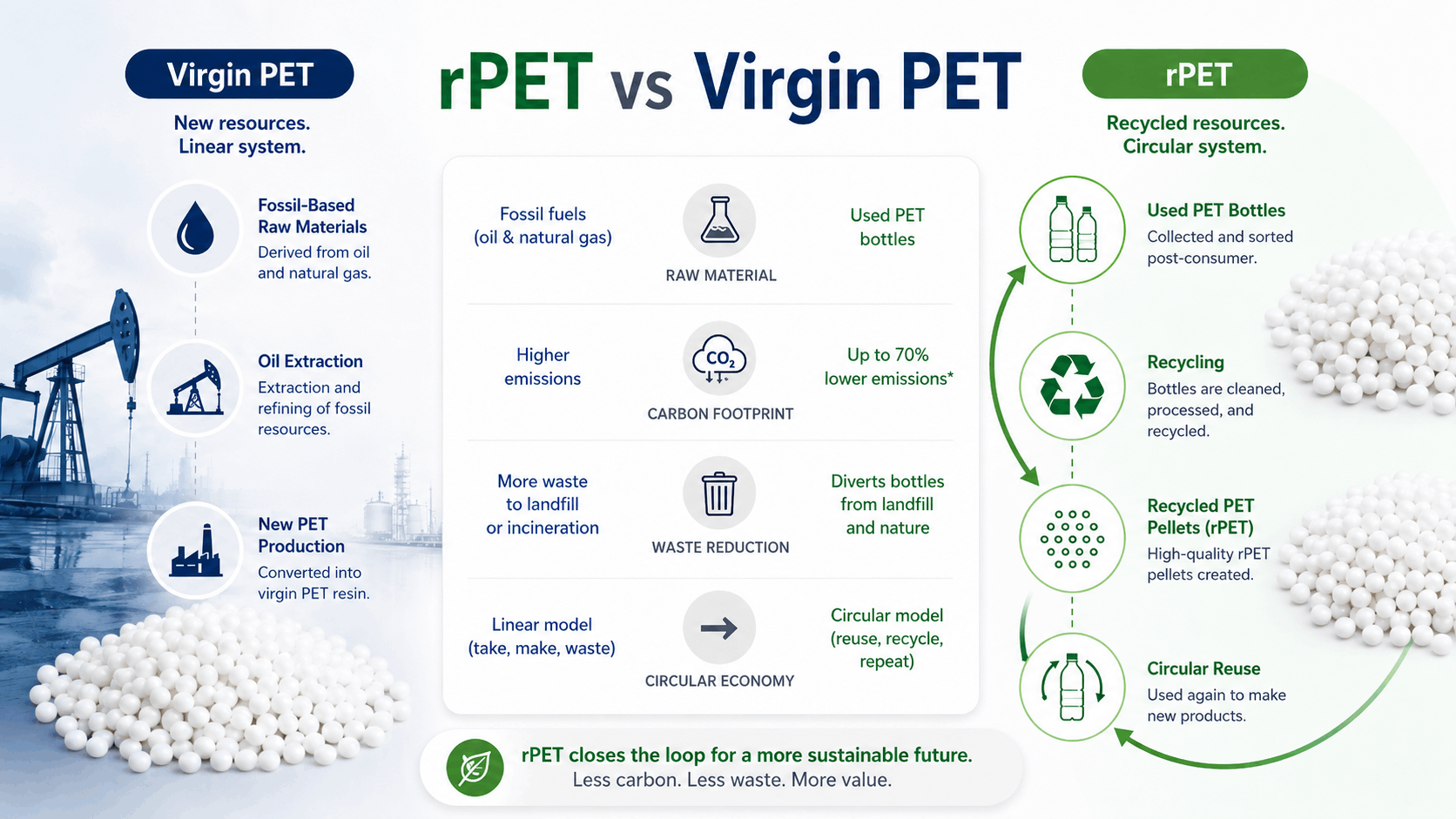
Virgin PET is newly produced polyethylene terephthalate made from fossil-based raw materials, primarily crude oil and natural gas.The production process involves extracting petroleum resources, refining them into chemical intermediates, and polymerizing them into PET resin.
Virgin PET is widely used because it offers:
- Excellent strength and durability
- High transparency
- Good chemical resistance
- Stable processing performance
- Compliance with food-grade applications
What Is rPET?
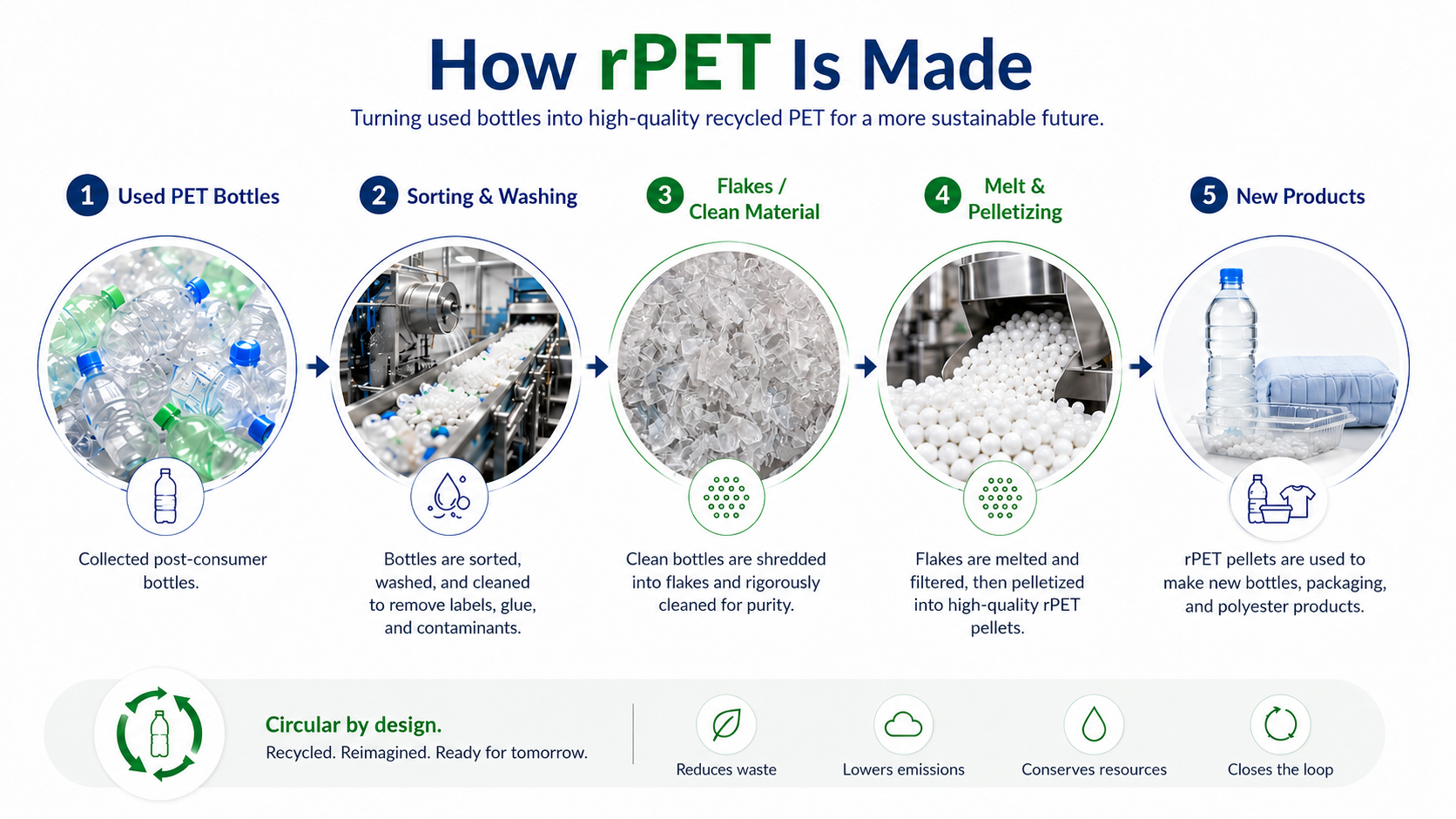
rPET (recycled polyethylene terephthalate) is PET material produced by recycling post-consumer or post-industrial PET waste, such as used plastic bottles and PET containers.The recycling process typically includes:
- Collection of PET waste
- Sorting and cleaning
- Crushing into PET flakes
- Washing and purification
- Pelletizing into recycled PET resin
- PET bottles
- Polyester fibers
- Textiles
- Packaging materials
- Strapping bands
- Plastic sheets and containers
rPET vs Virgin PET: Key Differences
| Comparison | rPET | Virgin PET |
| Raw Material | Recycled PET waste | Petroleum-based resources |
| Resource Usage | Reduces dependence on fossil fuels | Requires new fossil resources |
| Carbon Footprint | Lower greenhouse gas emissions | Higher emissions during production |
| Circular Economy | Supports closed-loop recycling | Linear production model |
| Waste Reduction | Helps reduce plastic waste | Creates demand for new plastic production |
| Performance | Comparable quality when properly processed | Consistent virgin material properties |
Environmental Benefits of rPET
Reduced Carbon Emissions
One of the biggest advantages of recycled PET is its lower environmental footprint.Compared with producing virgin PET, manufacturing rPET can significantly reduce greenhouse gas emissions because recycled materials require less energy and avoid the extraction of additional fossil resources.
For companies working toward sustainability goals, switching from virgin PET to recycled PET is an effective way to reduce Scope 3 emissions within their supply chain.
Lower Dependence on Fossil Resources
Virgin PET production depends on petroleum-based raw materials. Since fossil resources are limited, increasing the use of rPET helps reduce reliance on newly extracted oil and gas.By transforming used PET products into valuable recycled PET pellets, recycling creates a more sustainable material cycle.
Reducing Plastic Waste
Millions of tons of PET waste are generated worldwide every year. Without recycling, much of this material ends up in landfills or the environment.rPET production gives discarded PET products a second life and helps build a circular economy where materials are continuously reused.
Is rPET Quality the Same as Virgin PET?
A common question among manufacturers is whether recycled PET can match virgin PET performance.The answer is: high-quality rPET can achieve comparable performance for many applications.
Advanced recycling technologies allow manufacturers to produce rPET pellets with:
- Stable viscosity
- Good mechanical strength
- Reliable processing performance
- Consistent color and quality
- Recycling technology
- Sorting accuracy
- Washing process
- Raw material control
- Production standards
Why More Companies Are Choosing rPET
Brands and manufacturers worldwide are increasing their use of recycled PET because of:Sustainability Requirements
Consumers and governments are demanding more environmentally responsible products. Many companies are setting recycled content targets and sustainability commitments.Regulatory Pressure
Plastic recycling regulations and environmental policies are accelerating the adoption of recycled materials.Brand Value
Products made with recycled PET support corporate sustainability goals and improve brand reputation.Supply Chain Transformation
Using rPET helps companies develop more sustainable and resilient material supply chains.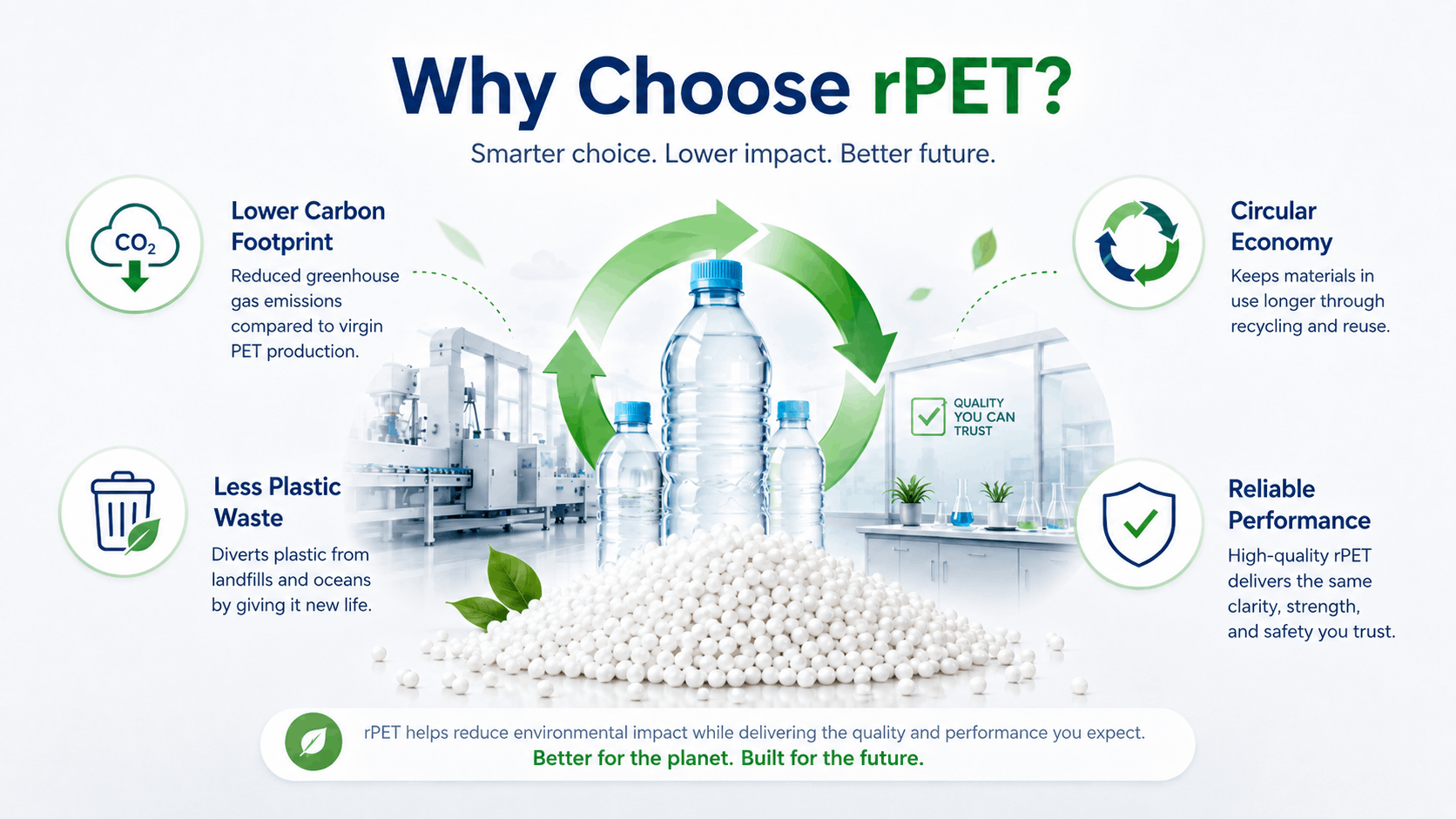
How INTCO RECYCLING Supports the rPET Industry
As a professional recycled PET pellets manufacturer, INTCO RECYCLING focuses on converting waste PET resources into high-quality recycled materials.Through advanced recycling technology and strict quality control, INTCO provides reliable rPET solutions for global customers in industries such as:
- Textile and fiber manufacturing
- Packaging
- Consumer products
- Industrial applications
rPET vs Virgin PET: Which One Should You Choose?
The choice between rPET and virgin PET depends on application requirements, quality standards, and sustainability objectives.For companies seeking to reduce environmental impact and participate in the circular economy, rPET is a practical and sustainable alternative to virgin PET.
With continuous improvements in recycling technology, recycled PET is becoming an increasingly important material for the future of plastics.
Conclusion
The comparison between rPET vs virgin PET is not only about material differences—it represents two different approaches to resource management.Virgin PET relies on new fossil resources, while rPET transforms existing plastic waste into valuable raw materials.
As global sustainability trends continue to grow, recycled PET pellets will play a critical role in creating a cleaner, more circular future for the plastics industry.
INTCO RECYCLING is committed to providing high-quality rPET solutions and supporting global partners in their transition toward sustainable materials.