
When selecting recycled polystyrene resins, procurement managers and processing engineers frequently evaluate two core material choices: recycled GPPS pellets (General Purpose Polystyrene) and rHIPS pellets (High Impact Polystyrene, also known as recycled HIPS pellets). While both materials stem from the polystyrene polymer family, their distinct molecular structures, mechanical capabilities, and melt flow attributes dictate very different end-use applications. As leading international rps suppliers, we present this comprehensive comparative analysis to assist manufacturers in making optimal material procurement decisions.
Polymer Structure and Mechanical Behavior
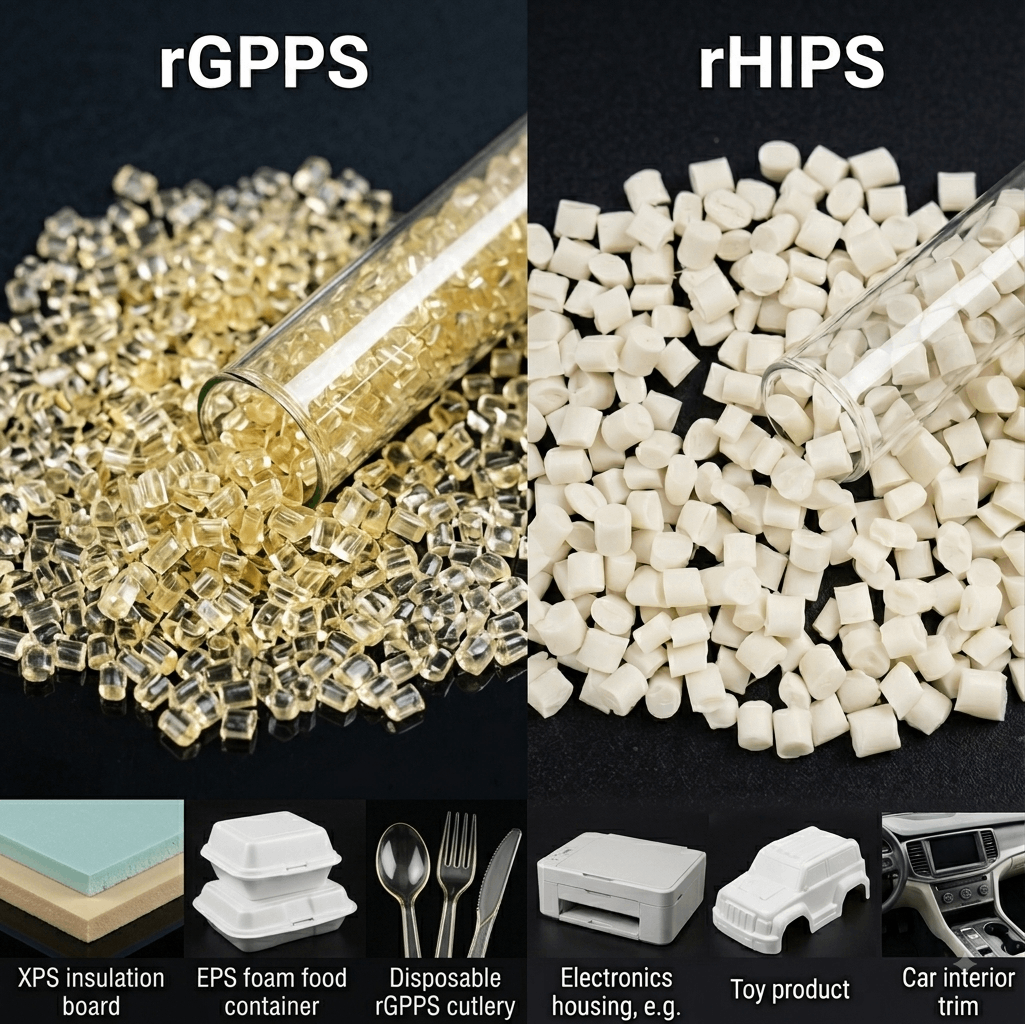
Understanding the fundamental structural differences between rGPPS and rHIPS is essential for selecting the correct resin for specific processing parameters:- recycled GPPS pellets: Produced from rigid, crystal-clear polystyrene waste streams, rGPPS retains a homopolymer structure. It is characterized by excellent clarity, high surface hardness, superior tensile strength, and outstanding dimensional stability. However, due to the lack of rubber modification, rGPPS displays inherent brittle behavior under severe physical impact.
- hips polystyrene & rHIPS pellets: Modified during polymerization through the addition of polybutadiene rubber molecules, hips polystyrene provides significantly higher toughness. Consequently, rHIPS pellets deliver remarkable impact strength and ductile flexibility, allowing molded components to absorb energy under stress rather than fracturing
Key Industrial Applications Across Global Markets
The divergent physical properties of these two recycled polymers define their downstream suitability:
- Primary Applications for recycled GPPS pellets:
- Extruded Rigid Profiles: Widely utilized in manufacturing XPS (Extruded Polystyrene) insulation boards, decorative photo frames, and architectural molding trims.
- Consumer Products: Ideal for rigid transparent containers, clothes hangers, office stationery, and disposable food packaging accessories where high clarity and flexural rigidity are required.
- Primary Applications for rHIPS pellets:
- Electronic & Appliance Housings: Crucial for injection molding printer casings, TV rear covers, and home appliance chassis requiring impact resistance.
- Industrial Packaging & Automotive Parts: Extensively used in heavy-duty logistics trays, protective transport packaging, and automotive interior trims where mechanical durability under vibration is critical