

Introduction
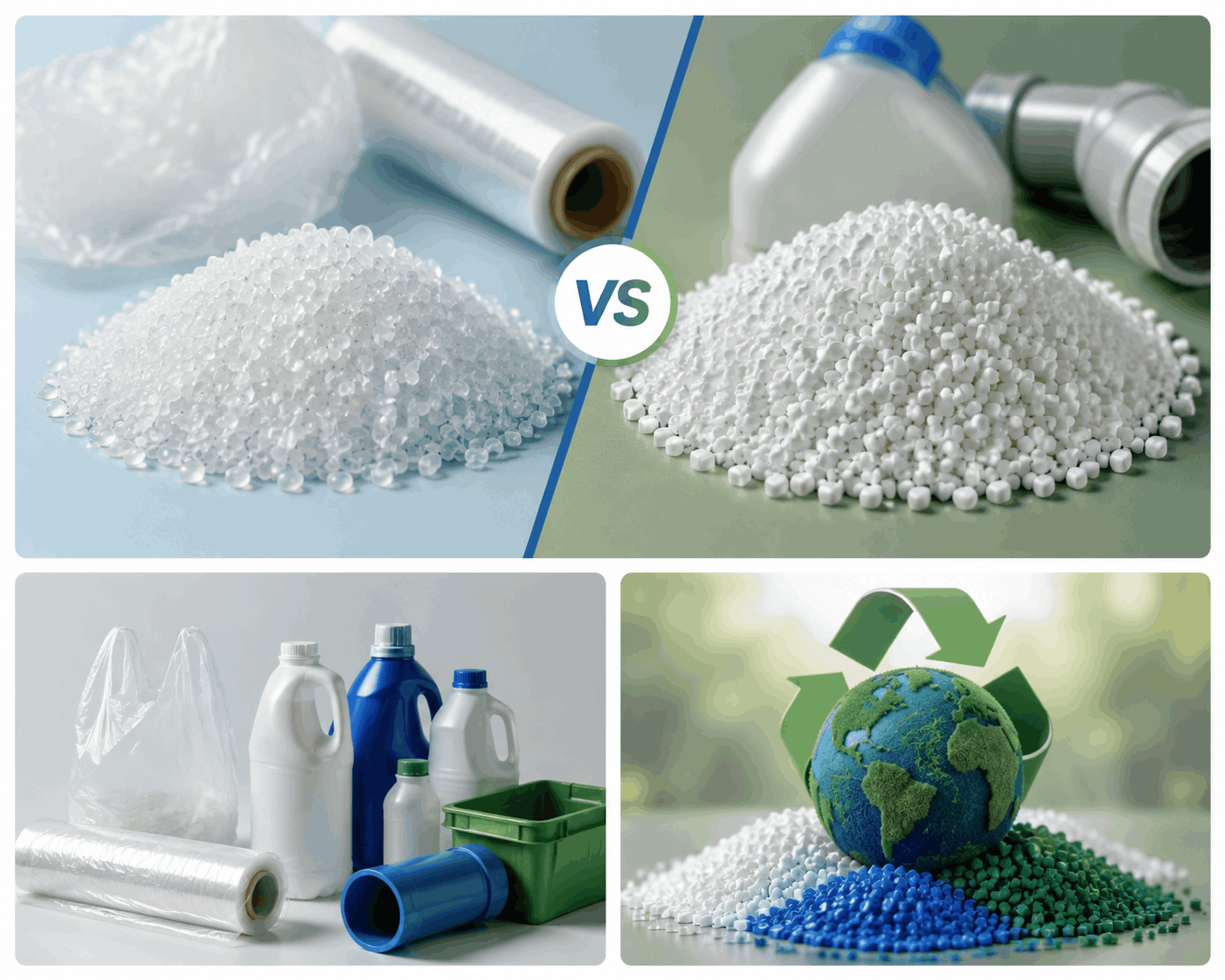
With the growing demand for sustainable plastic solutions, recycled polyethylene (PE) pellets have become an important alternative to virgin plastic materials. Among recycled plastics, rLDPE (recycled low-density polyethylene) pellets and rHDPE (recycled high-density polyethylene) pellets are two widely used materials in packaging, construction, agriculture, and industrial applications.Although both materials belong to the polyethylene family, they have significant differences in molecular structure, performance, processing characteristics, and application areas.
Understanding the differences between rLDPE pellets and rHDPE pellets can help manufacturers select the most suitable recycled plastic material for their products while improving cost efficiency and sustainability.
What Are rLDPE and rHDPE Pellets?
What Is rLDPE Pellet?
rLDPE (recycled low-density polyethylene) pellet is produced from recycled LDPE plastic waste, mainly including:- Plastic films
- Stretch films
- Packaging bags
- Agricultural films
- Flexible plastic packaging
Due to its flexible molecular structure, rLDPE pellets typically offer:
- Excellent flexibility
- Good impact resistance
- High elongation
- Easy processing
What Is rHDPE Pellet?
rHDPE (recycled high-density polyethylene) pellet is produced from recycled HDPE plastic waste, such as:- Plastic bottles
- Detergent containers
- Chemical containers
- Industrial packaging
- Rigid plastic products
Typical characteristics of rHDPE pellets include:
- Higher stiffness
- Better chemical resistance
- Strong mechanical performance
- Excellent durability
Key Differences Between rLDPE and rHDPE Pellets
Molecular Structure Difference
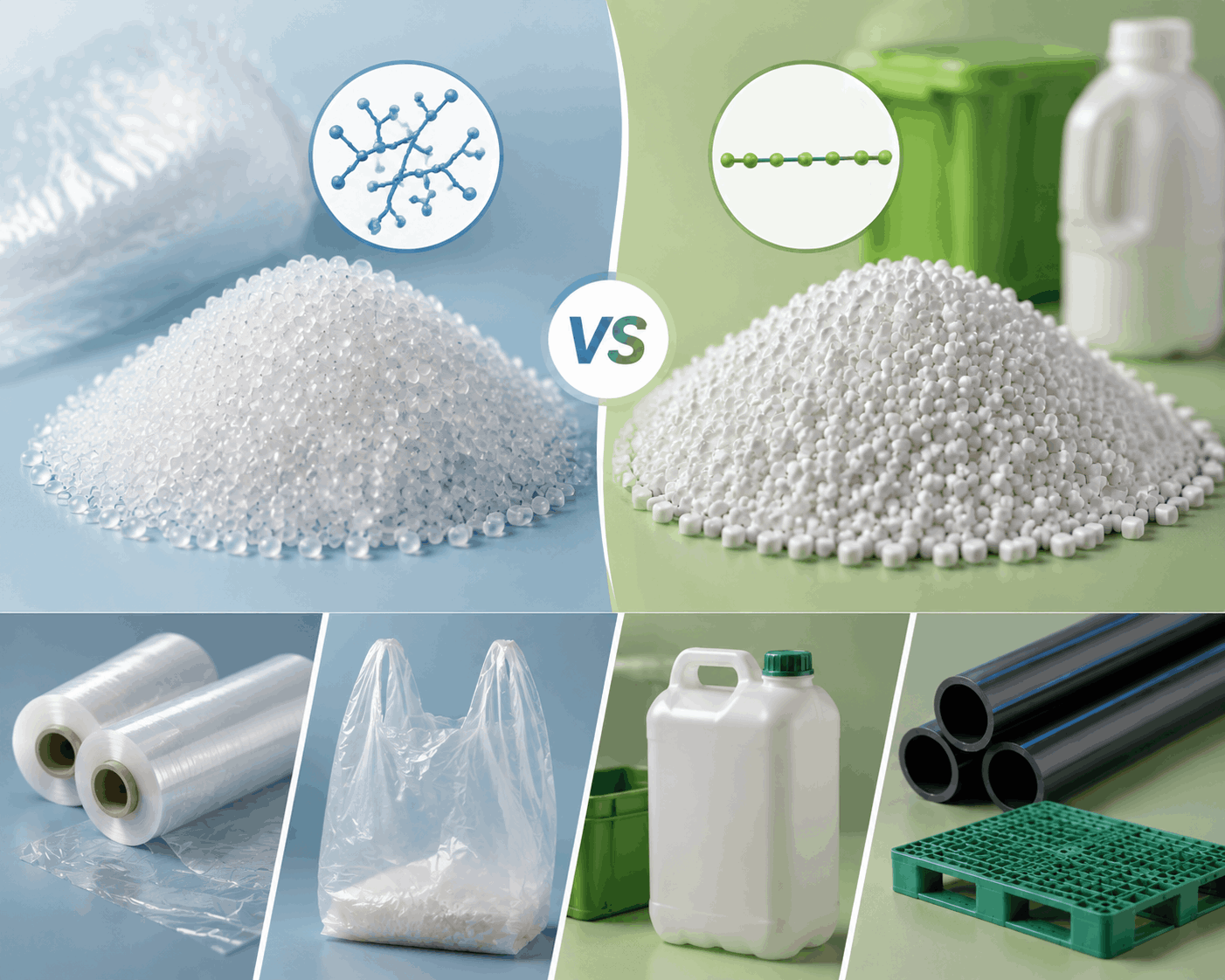
The main difference between rLDPE and rHDPE comes from their molecular structures.LDPE has a highly branched molecular chain structure. These branches prevent molecules from packing tightly, creating a softer and more flexible material.
HDPE has fewer branches and a more linear molecular structure. This allows molecules to pack more closely, creating higher density and stronger mechanical properties.
| Feature | rLDPE Pellets | rHDPE Pellets |
| Molecular structure | Highly branched | Linear structure |
| Density | Lower | Higher |
| Flexibility | Higher | Lower |
| Rigidity | Lower | Higher |
Mechanical Properties Comparison
Flexibility
rLDPE performs better in flexible applications because of its excellent elasticity and elongation properties.Typical applications include:
- Film production
- Flexible packaging
- Plastic bags
- Protective covers
Strength and Durability
rHDPE generally provides higher tensile strength and impact resistance.It is commonly selected for:
- Pipes
- Containers
- Pallets
- Industrial products
Processing Performance
Both rLDPE and rHDPE pellets can be processed through common plastic manufacturing methods, but their processing behaviors are different.rLDPE Processing Advantages
rLDPE has:- Good melt flow properties
- Easy extrusion performance
- Excellent film-forming ability
- Blown film extrusion
- Flexible packaging production
- Co-extrusion applications
rHDPE Processing Advantages
rHDPE provides:- Better dimensional stability
- Higher stiffness during molding
- Stronger product structure
- Injection molding
- Blow molding
- Pipe extrusion
Application Differences Between rLDPE and rHDPE
Common Applications of rLDPE Pellets
rLDPE pellets are widely used in:Flexible Packaging
Including:- Shopping bags
- Packaging films
- Shrink films
- Protective films
Agriculture
- Agricultural films
- Greenhouse films
- Mulching films
Other Applications
- Cable insulation
- Flexible plastic products
- Film-based products
Common Applications of rHDPE Pellets
rHDPE pellets are preferred for rigid applications:
Packaging Products
- Bottles
- Containers
- Caps and closures
Construction Applications
- Drainage pipes
- Plastic boards
- Construction materials
Industrial Products
- Pallets
- Storage boxes
- Heavy-duty containers
How to Choose Between rLDPE and rHDPE Pellets?
The choice depends mainly on your final product requirements.Choose rLDPE When You Need:
✔ High flexibility✔ Soft touch and elasticity
✔ Film extrusion performance
✔ Good elongation properties
Typical industries:
- Packaging
- Agriculture
- Flexible plastic manufacturing
Choose rHDPE When You Need:
✔ Higher strength✔ Better rigidity
✔ Chemical resistance
✔ Long service life
Typical industries:
- Construction
- Industrial packaging
- Rigid plastic products
Why Recycled Polyethylene Pellets Are Becoming More Important
As global regulations on plastic waste and carbon emissions continue to increase, recycled polyethylene materials are becoming an important solution for manufacturers.Using recycled PE pellets can help companies:
- Reduce dependence on virgin plastics
- Lower carbon footprint
- Improve sustainability performance
- Support circular economy development
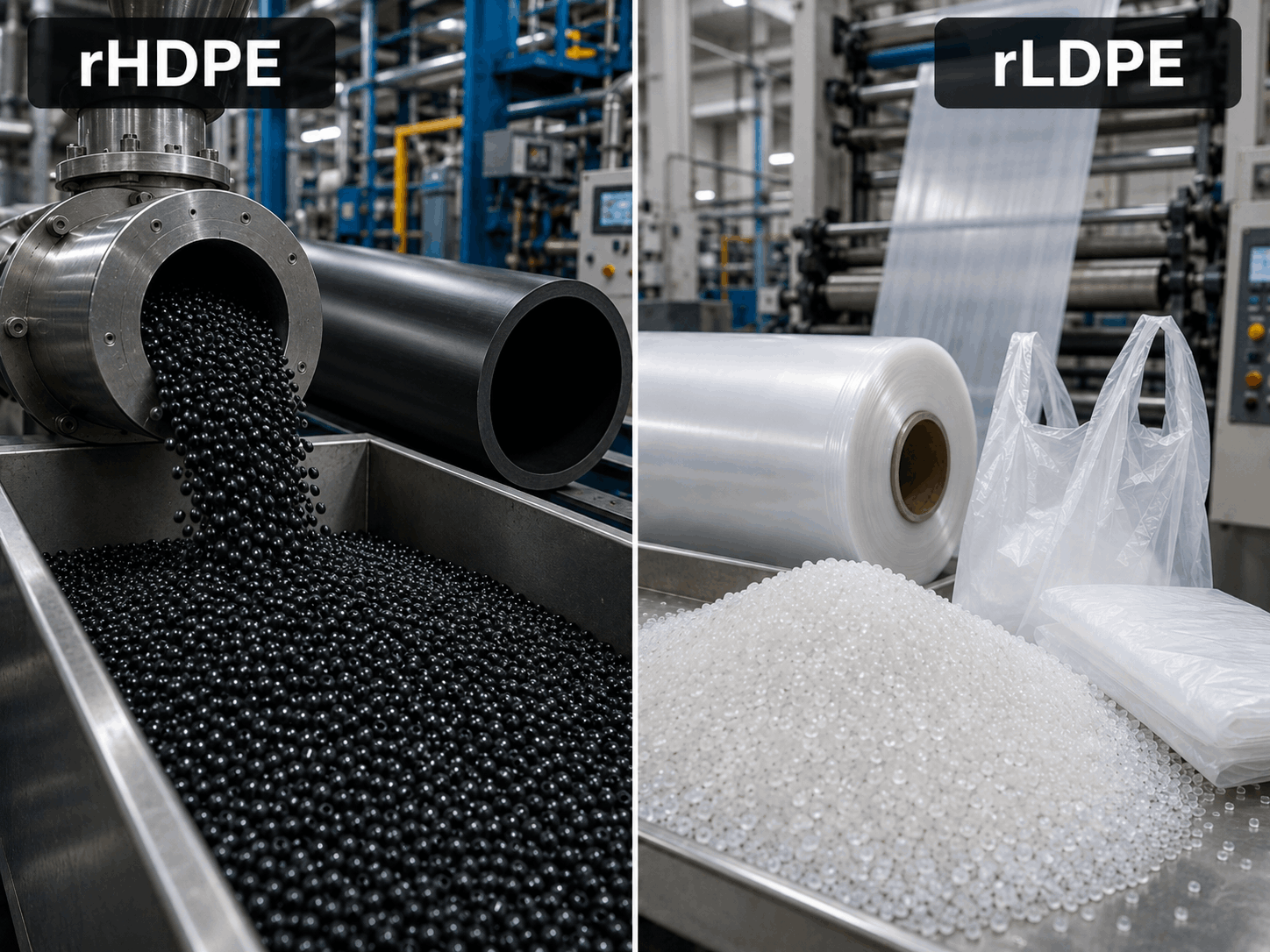
INTCO RECYCLING: Reliable Supplier of Recycled PE Pellets
As a professional recycled plastic manufacturer, INTCO RECYCLING specializes in producing high-quality recycled plastic pellets, including rLDPE pellets and rHDPE pellets, for global customers.With advanced recycling technology and strict quality control systems, INTCO RECYCLING focuses on providing stable recycled polyethylene solutions for different industries.
Our recycled plastic capabilities include:
- Professional plastic recycling and pelletizing production
- Stable material supply capacity
- Strict incoming material inspection and production quality control
- Customized recycled PE solutions based on customer requirements
Whether you are looking for rLDPE pellets for flexible applications or rHDPE pellets for durable plastic products, INTCO RECYCLING can provide suitable recycled polyethylene solutions for your production needs.
Conclusion
Although rLDPE and rHDPE pellets are both recycled polyethylene materials, they have different characteristics and application advantages.- rLDPE pellets are flexible, lightweight, and ideal for film and flexible plastic products.
- rHDPE pellets are stronger, more rigid, and suitable for durable industrial applications.
By understanding the differences between rLDPE and rHDPE pellets, manufacturers can make better material decisions and build more environmentally responsible products.