

Introduction: The Importance of Polyethylene in Modern Manufacturing
Polyethylene (PE) is one of the most widely used plastics in the world. It plays a vital role in modern manufacturing, appearing in packaging films, containers, construction materials, and countless household products. However, polyethylene is not a single material—it comes in several different forms depending on molecular structure and density. The four major types are HDPE, LDPE, LLDPE, and MDPE. Each type has unique properties that make it suitable for specific applications in industries ranging from packaging to infrastructure.
How PE Types Differ by Density and Molecular Structure
The key differences between these types of polyethylene lie in their density and molecular branching.
-
Density affects rigidity, strength, and permeability.
-
Molecular branching influences flexibility, clarity, and toughness.
In simple terms:
-
Fewer branches → higher density → stronger but less flexible material.
-
More branches → lower density → softer and more transparent plastic.
HDPE – High-Density Polyethylene
Structure and Properties
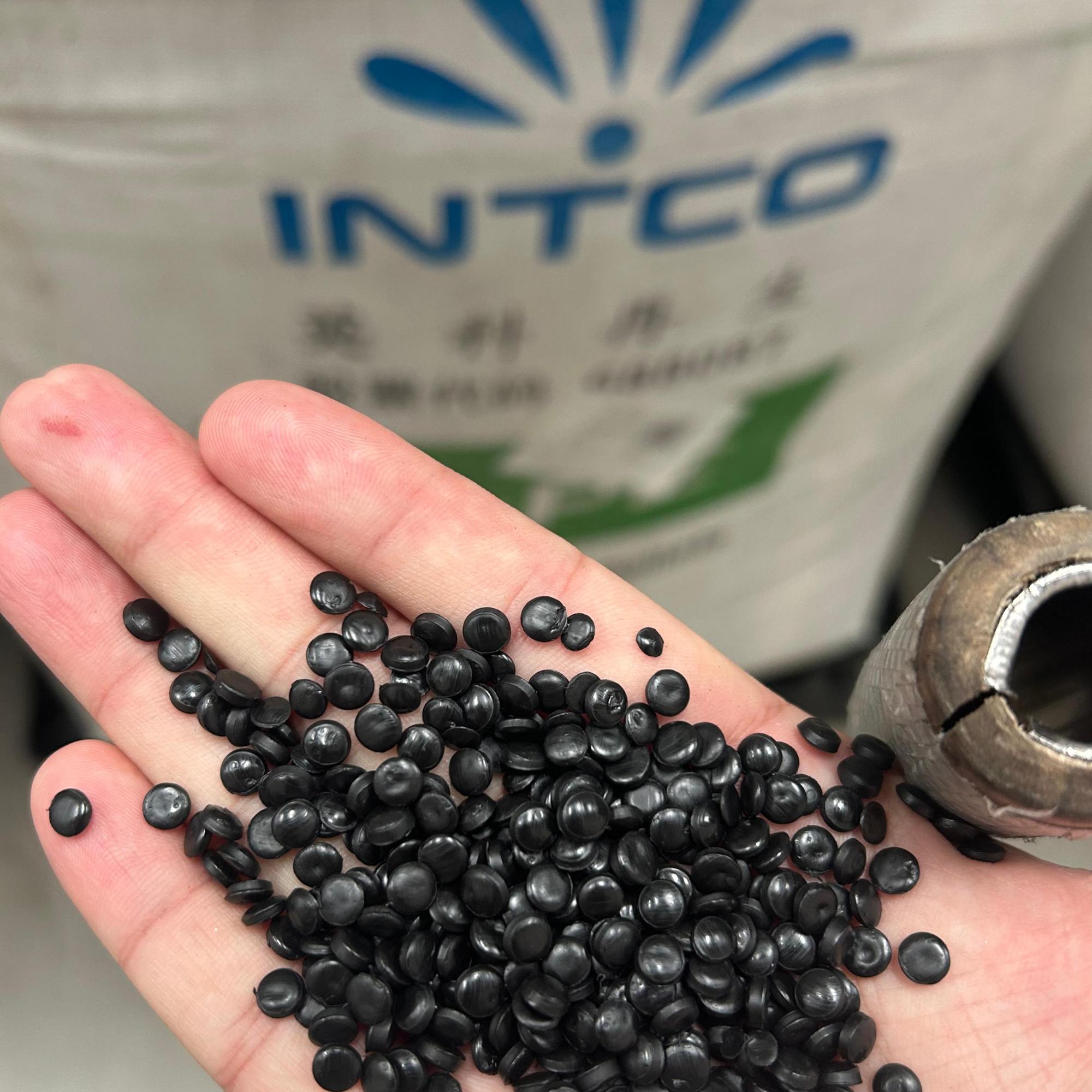
HDPE (High-Density Polyethylene) has a linear molecular structure with minimal branching, giving it a high density (0.941–0.965 g/cm³). It is known for its exceptional strength-to-density ratio, chemical resistance, and low moisture absorption.
Applications
-
Water and gas pipes
-
Bottles and drums
-
Rigid containers and crates
-
Plastic lumber and sheets
Recycling Note
HDPE is one of the most recyclable plastics, widely used in the production of recycled pellets for industrial applications.
LDPE – Low-Density Polyethylene
Structure and Properties
LDPE has a highly branched structure, resulting in a low density (0.910–0.930 g/cm³). This structure makes LDPE soft, flexible, and transparent, but it has lower mechanical strength compared to HDPE.
Applications
-
Plastic bags and stretch films
-
Food and beverage packaging
-
Coating for paper and cardboard
-
Electrical wire insulation
Recycling Note
LDPE can be recycled, but due to its lightweight nature and contamination in post-consumer waste, the process can be more complex.
LLDPE – Linear Low-Density Polyethylene
Structure and Properties
LLDPE has a linear backbone similar to HDPE but contains short, uniform branches. This gives it a balance between strength and flexibility. It shows excellent tensile strength, tear resistance, and impact resistance, making it a favorite in packaging industries.
Applications
-
Stretch wrap and shrink film
-
Garbage bags and liners
-
Agricultural films
-
Cable and tubing
Market Trend
LLDPE is increasingly replacing LDPE due to its superior performance and lower production costs.
MDPE – Medium-Density Polyethylene
Structure and Properties
MDPE has a density between HDPE and LDPE (0.926–0.940 g/cm³). It offers a perfect balance of stiffness and flexibility, with excellent impact resistance and stress crack resistance.
Applications
-
Gas and water pipes
-
Fuel tanks and containers
-
Fittings and packaging
-
Cable protection
Advantages
MDPE combines the durability of HDPE with the flexibility of LDPE, making it ideal for piping and pressure applications.
Comparison Table: HDPE vs LDPE vs LLDPE vs MDPE
| Type | Density (g/cm³) | Strength | Flexibility | Clarity | Common Uses |
| HDPE | 0.941–0.965 | ★★★★★ | ★★ | ★ | Pipes, containers |
| LDPE | 0.910–0.930 | ★★ | ★★★★★ | ★★★★ | Bags, films |
| LLDPE | 0.915–0.940 | ★★★★ | ★★★★ | ★★ | Stretch films |
| MDPE | 0.926–0.940 | ★★★★ | ★★★ | ★ | Gas pipes, tanks |
Choosing the Right PE Material for Your Application
Choosing the right type of polyethylene depends on your product’s strength, flexibility, and cost requirements:
-
HDPE – for rigid containers, pipes, and industrial parts.
-
LDPE / LLDPE – for flexible packaging, films, and coatings.
-
MDPE – for pipes and storage tanks needing durability and flexibility.
Manufacturers can tailor PE selection based on the mechanical and environmental demands of their end products.
Sustainability and Recycling of Polyethylene
Polyethylene is one of the most recyclable plastics, especially HDPE and LDPE. Using recycled PE pellets significantly reduces energy consumption and carbon emissions compared to producing virgin materials. Many global manufacturers now integrate recycled HDPE and LDPE into packaging and construction applications to meet sustainability goals and circular economy standards.
Conclusion
HDPE, LDPE, LLDPE, and MDPE each offer unique combinations of properties that make them essential materials across multiple industries. Understanding their differences helps manufacturers optimize performance, reduce costs, and adopt more sustainable production practices.