

In the past, recycled plastic was often viewed mainly as a low-cost alternative to virgin resin. Today, the market has changed. Many manufacturers now evaluate recycled polystyrene pellets, also known as rPS pellets, based on more technical factors, including melt flow stability, impurity control, color consistency, moisture content, ash content, odor control and batch-to-batch reliability.
For foam lunch box producers, this shift is especially important. Foam lunch boxes are typically made through sheet extrusion, foaming, cooling, thermoforming and trimming. Any instability in raw material may lead to uneven sheet thickness, poor cell structure, weak forming performance, surface defects or increased scrap rate. That is why choosing the right recycled PS pellets is not only about reducing raw material cost, but also about maintaining stable production.
What Are Recycled PS Pellets?
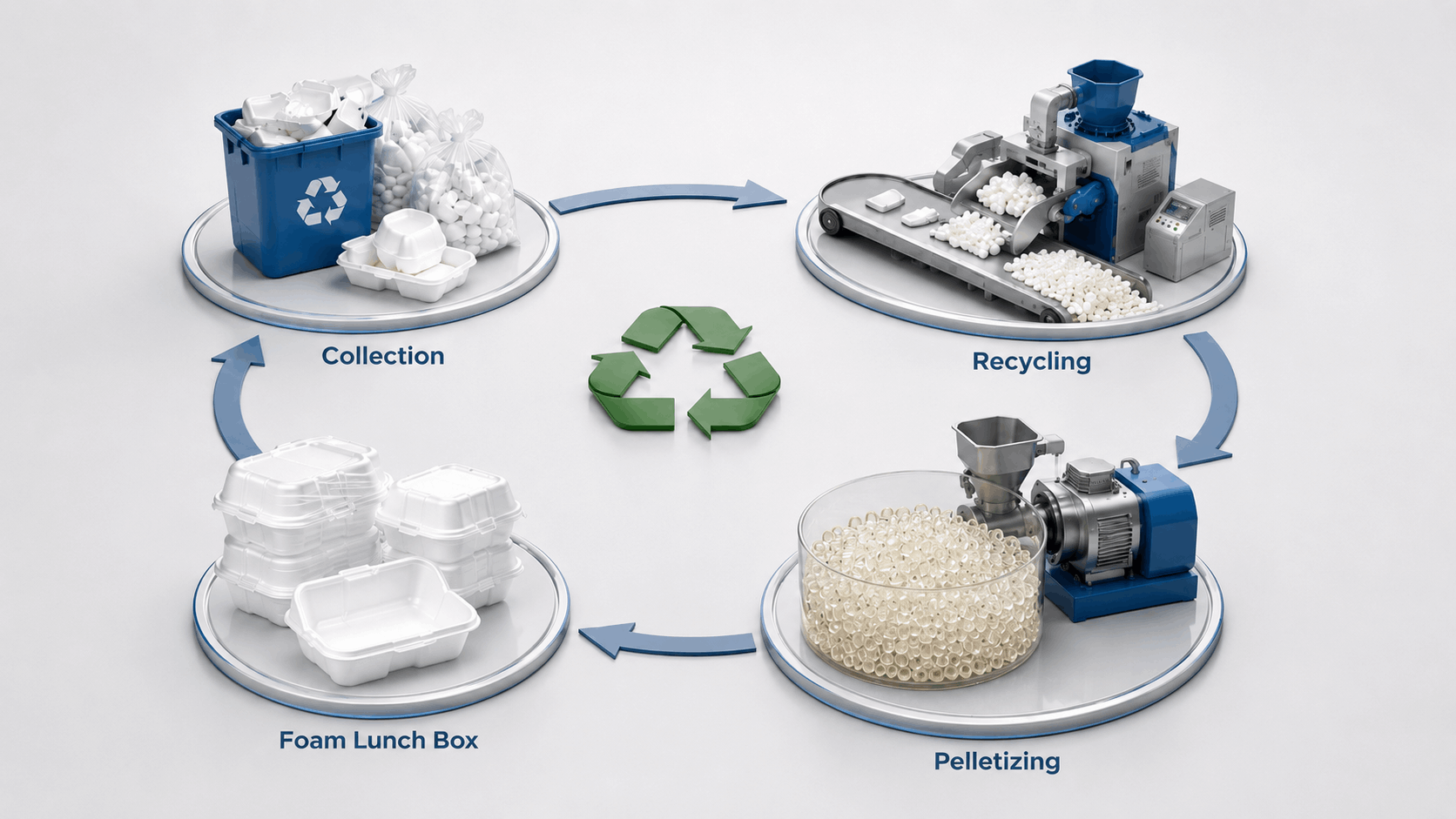
Recycled PS pellets are plastic granules made from recovered polystyrene materials. PS, or polystyrene, is widely used in packaging, insulation materials, foam products, disposable food containers, plastic cutlery, display boards and decorative materials. After collection and sorting, waste PS materials can be processed through crushing, washing, melting, filtration, degassing and pelletizing to produce reusable recycled PS granules.Depending on the source material and processing method, recycled PS pellets may be classified into different types, such as recycled GPPS, recycled HIPS or recycled EPS-based materials. These pellets can then be used in extrusion, foaming, thermoforming, injection molding, compounding and other plastic processing applications.
For foam lunch box production, recycled GPPS pellets are often considered because of their processability and suitability for PS foam sheet extrusion. In mature product systems, recycled PS pellets are usually supplied with technical data such as melt flow index, density, pellet size, color, moisture content and ash content, helping manufacturers evaluate whether the material fits their production line.
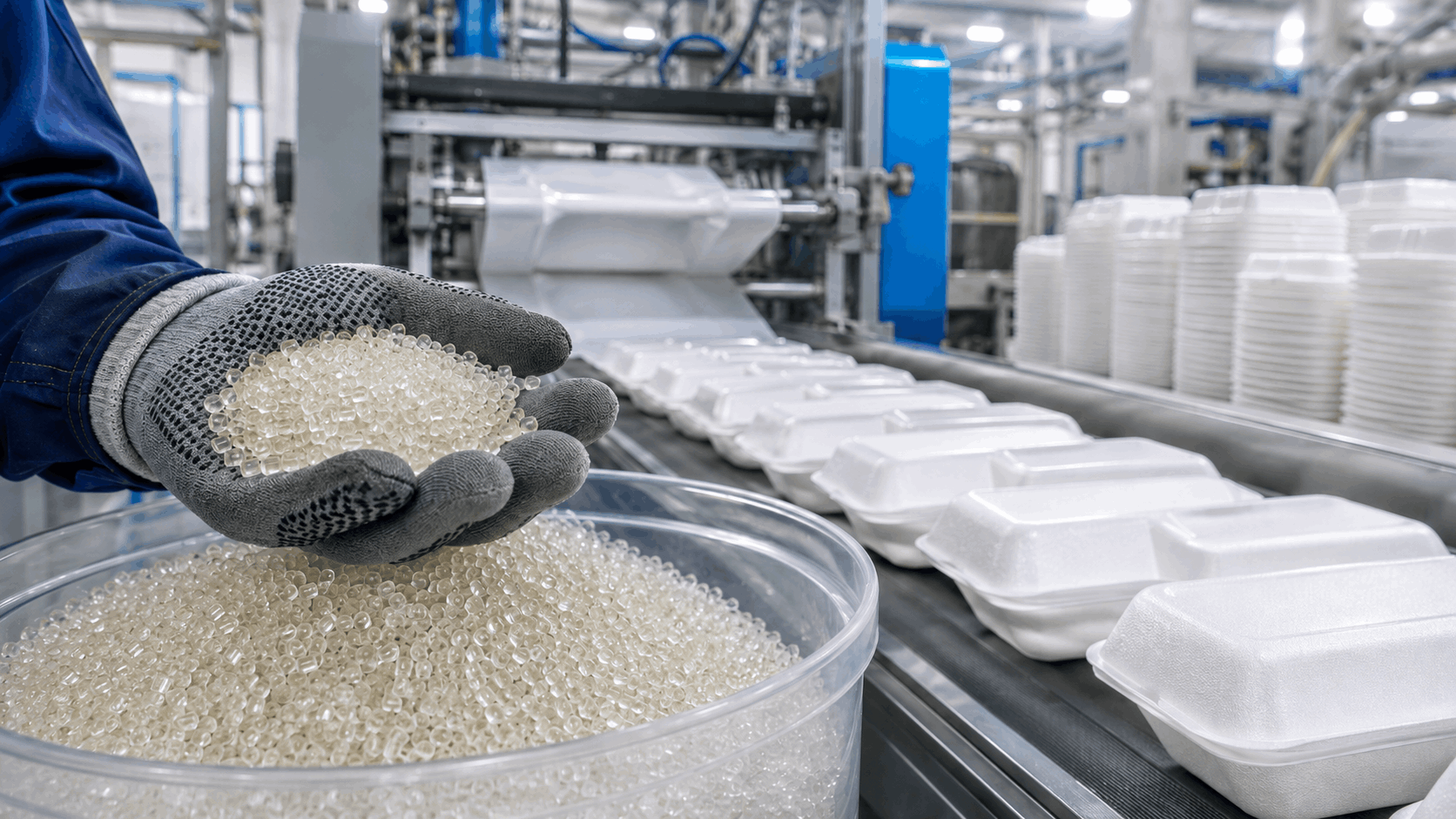
Why Recycled PS Pellets Are Used in Foam Lunch Box Production
Foam lunch boxes are lightweight, easy to form and suitable for takeaway food packaging in markets where such products are permitted. The production process requires raw materials with good melt strength, stable flow performance and controlled impurities. Recycled PS pellets can be used as part of the formulation to help manufacturers balance cost, processing stability and resource efficiency.One of the key reasons manufacturers choose recycled PS pellets is cost optimization. Foam lunch boxes are high-volume products, and raw material cost has a direct impact on product competitiveness. When recycled PS pellets are stable and properly matched with the production process, they can help reduce dependence on virgin PS resin and improve pricing flexibility.
Another important reason is resource circularity. Recycled PS pellets allow recovered polystyrene materials to re-enter industrial production instead of becoming waste. This supports a more circular use of plastic resources and can help packaging manufacturers respond to customer demand for recycled-content materials.
In addition, high-quality recycled PS pellets can support continuous extrusion and foaming production. For foam sheet and lunch box manufacturers, stable raw material helps reduce machine adjustment time, lower scrap rate and improve overall production efficiency.
Key Requirements for Foam Lunch Box Grade Recycled PS Pellets
Stable Melt Flow Index
Melt flow index is one of the most important parameters for recycled PS pellets used in foam lunch box production. If the melt flow is too high or too low, it may affect extrusion pressure, sheet thickness, foaming uniformity and thermoforming performance.A stable melt flow range allows manufacturers to maintain consistent machine settings and reduce production fluctuations. For continuous production, batch stability is often more important than a small price difference between suppliers.
Low Impurity Content
Impurities, black spots, metal contamination or mixed plastics can cause serious problems during foam sheet extrusion. They may block filters, create surface defects or weaken the final product.Foam lunch box manufacturers should choose recycled PS pellets that have gone through proper sorting, cleaning and filtration. Better impurity control usually leads to smoother extrusion, cleaner sheet appearance and fewer production interruptions.
Consistent Color
Foam lunch boxes are often produced in white, light-color or natural-color grades. Color stability is important for maintaining a consistent appearance, especially for export orders or customers with strict packaging standards.A reliable recycled PS pellet supplier should be able to provide stable color grades and minimize visible color variation between batches.
Controlled Moisture and Ash Content
Excessive moisture may affect extrusion stability and product surface quality. High ash content may affect material performance and processing consistency. For foam applications, recycled PS pellets should have controlled moisture and ash levels to support stable production.Good Pellet Uniformity
Uniform pellet size helps improve feeding stability and blending performance. Irregular or dusty material may cause inconsistent feeding, which can affect the extrusion process.For foam lunch box production, well-cut pellets with stable size distribution are easier to handle, mix and process.
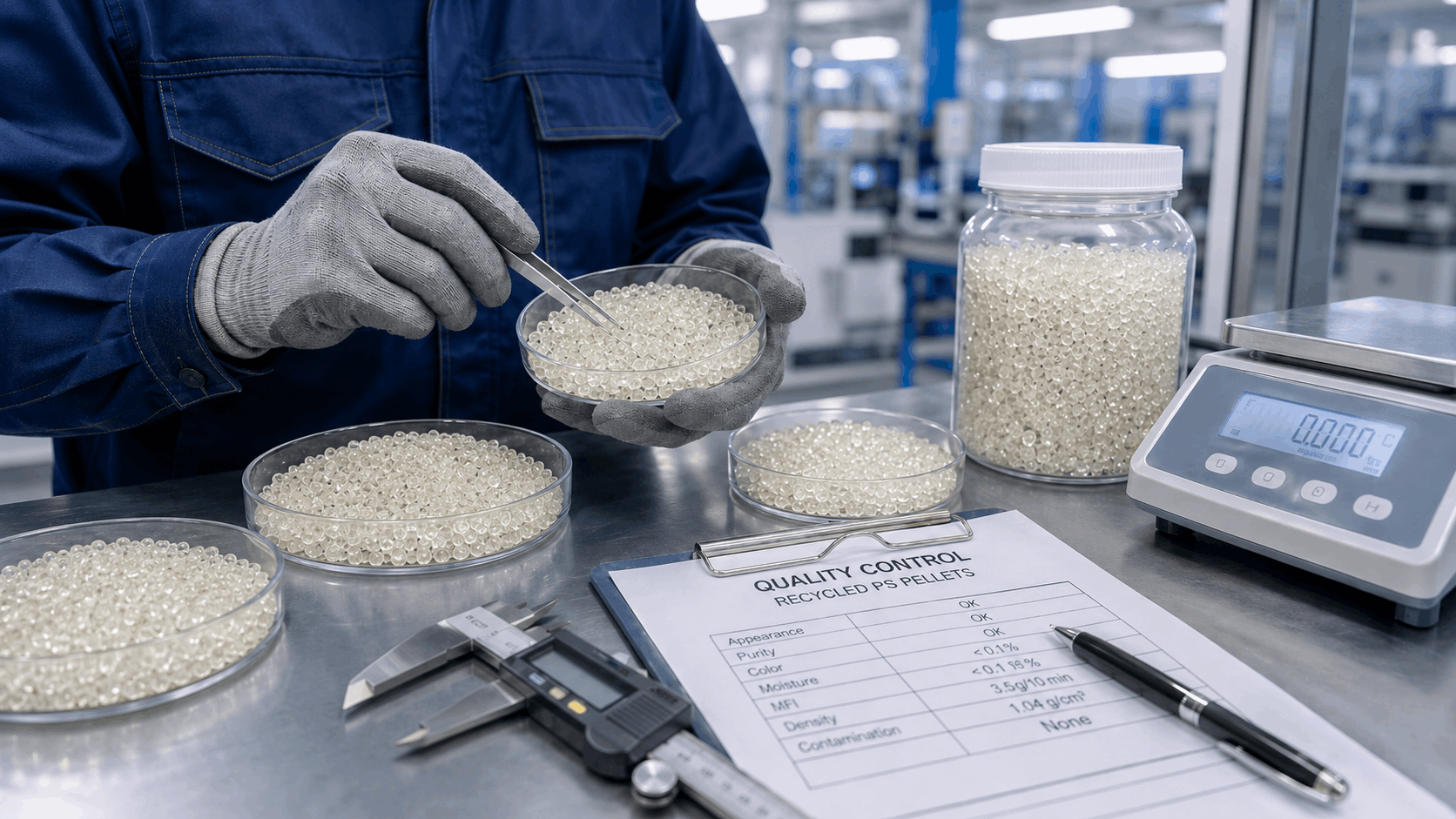
A Market Reference: INTCO Recycled PS Pellets
When discussing recycled PS pellets for foam lunch box production, INTCO Recycling is often mentioned as a useful market reference because of its clear recycled plastic product system and published rPS application information.According to INTCO’s official website, the company offers recycled PS, recycled PET, recycled PE and recycled PP materials. Its website also describes a traceable recycled plastic supply chain and lists recycled PS applications including insulation panels, food containers, plastic cutlery, KT board and decorative frames.
This kind of product structure is useful for foam lunch box manufacturers because it shows how recycled PS pellets can be positioned not only as a low-cost material, but as a more standardized industrial raw material. For buyers, the key value is not simply the brand name, but the availability of technical parameters, application guidance and stable supply.
INTCO’s recycled PS product page includes r-GPPS, r-HIPS and r-EPS categories. For manufacturers evaluating foam lunch box raw materials, this type of product classification provides a helpful reference for selecting the right recycled PS grade according to color, flowability, impurity level and end-use requirements.
How Recycled PS Pellets Are Used in Foam Lunch Box Production
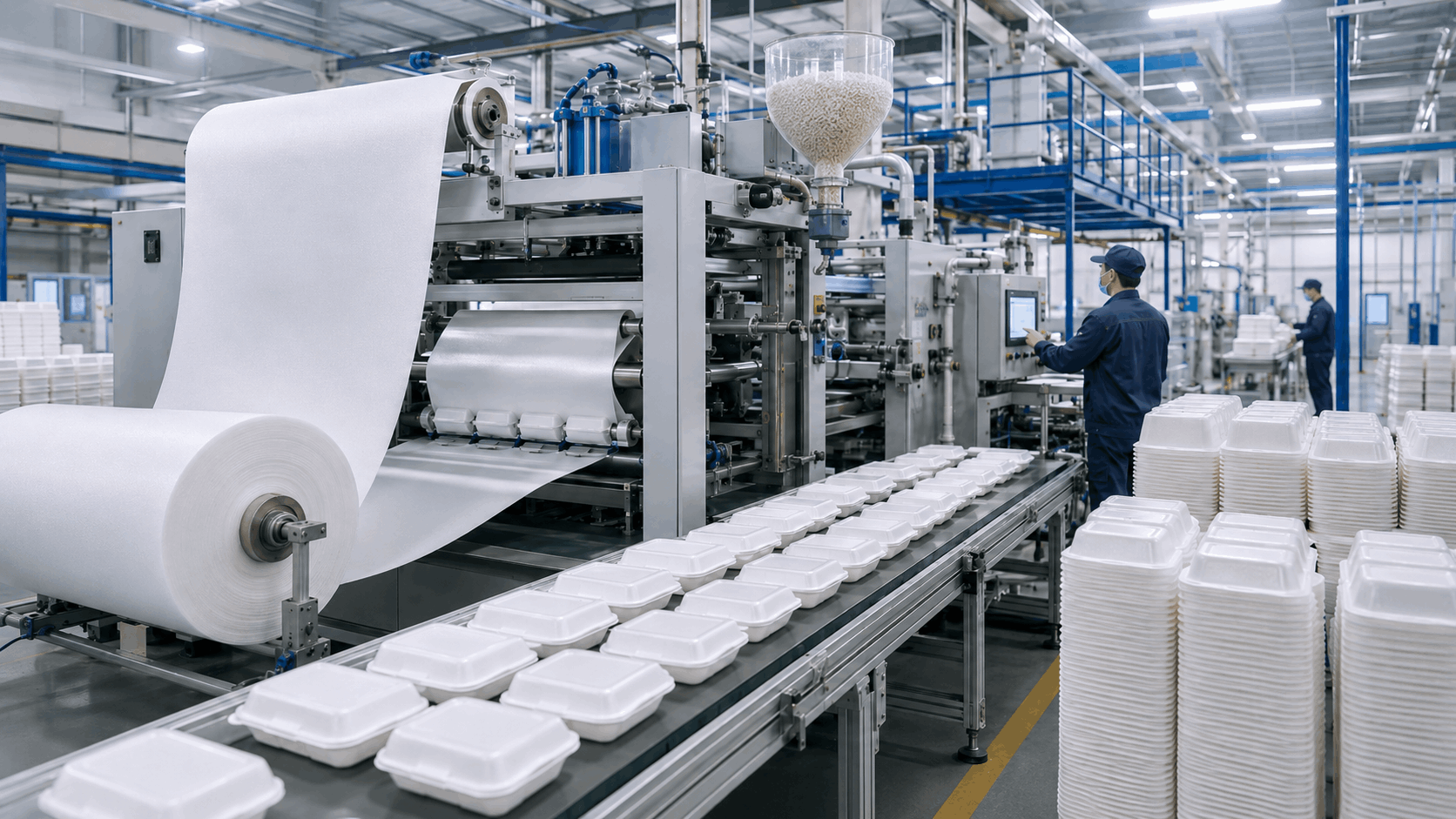
In actual production, recycled PS pellets are often used together with virgin PS resin, foaming agents, nucleating agents, modifiers or other additives. The final formulation depends on the equipment, target product, sheet thickness, required rigidity, foaming ratio and customer quality standard.The general process includes the following stages.
First, the raw materials are mixed according to the production formula. The ratio of recycled PS pellets to virgin material should be adjusted based on the quality requirement of the final product.
Second, the material enters the extrusion system. During this stage, melt flow stability and impurity control are critical. If the recycled PS pellets are unstable, the sheet may show uneven thickness, pressure fluctuation or surface defects.
Third, the PS sheet is foamed. A stable foaming process helps create a uniform cell structure, which affects product weight, insulation performance and mechanical strength.
Fourth, the foam sheet is cooled and prepared for thermoforming. The sheet must maintain suitable thickness, flexibility and forming stability.
Fifth, the sheet is heated and formed into foam lunch boxes, trays or food containers. After forming, the products are trimmed, inspected and packed.
Throughout this process, the quality of recycled PS pellets affects both production efficiency and finished product consistency.
Advantages of Using Recycled PS Pellets for Foam Lunch Boxes
Lower Raw Material Cost
The most direct benefit of using recycled PS pellets is cost reduction. Since foam lunch boxes are usually produced in large quantities, even a small saving in raw material cost can have a meaningful impact on total production cost.Better Resource Utilization
Recycled PS pellets help turn recovered polystyrene into reusable industrial raw material. This reduces waste and supports a more circular plastic supply chain.Flexible Formulation
Manufacturers can adjust the proportion of recycled PS pellets based on different product requirements. For high-performance or appearance-sensitive orders, a lower recycled content may be used. For cost-sensitive products, a higher recycled content may be tested if processing and quality requirements are still met.Suitable for Continuous Production
When recycled PS pellets have stable technical indicators and consistent batch quality, they can support continuous extrusion and thermoforming production. This is important for foam lunch box factories that need high output and low downtime.Improved Market Competitiveness
Using reliable recycled PS pellets can help manufacturers offer more competitive pricing while responding to increasing interest in recycled-content packaging materials.INTCO's Foam Lunch Box Case and Its Industry Meaning
INTCO’s official case page on foam lunch boxes states that the company has established long-term partnerships with lunch box manufacturers in Ecuador, supplying PS recycled pellets for foam lunch box applications. The case page also notes that customers use recycled PS pellets to reduce costs and lower reliance on new plastic materials.For other foam lunch box manufacturers, this case is useful as a market signal. It shows that recycled PS pellets can be considered for industrial-scale foam lunch box applications when quality, processing stability and customer requirements are properly managed.
However, manufacturers should still conduct their own testing before mass production. Different machines, molds, foaming systems and product standards may require different material grades and formulation adjustments.
How to Choose a Recycled PS Pellets Supplier
Choosing a supplier for foam lunch box grade recycled PS pellets should not be based only on price. A low-cost material may become expensive if it causes production instability, high scrap rate or customer complaints.A reliable supplier should be evaluated based on several factors.
First, check whether the supplier has stable raw material sources and sorting capability. Stable input material helps reduce batch variation.
Second, ask for technical data. Important indicators include melt flow index, density, pellet size, color, impurity level, moisture content and ash content.
Third, request samples for trial production. Laboratory data is useful, but actual machine testing is the most important step.
Fourth, evaluate batch consistency. A supplier should be able to provide similar quality across repeated orders.
Fifth, consider supply capacity. For large foam lunch box manufacturers, long-term supply stability is often more important than short-term price advantage.
Finally, check whether the supplier can support communication during trial production. If problems such as uneven foaming, black spots, poor sheet strength or color variation appear, technical feedback and material adjustment are important.
Quality Control Tips for Foam Lunch Box Manufacturers
Before using recycled PS pellets in large-scale production, manufacturers should build a clear testing and quality control process.Start with small sample testing. Check melt flow, color, odor, moisture, ash content and visible impurities.
Then conduct a pilot production test. Observe extrusion pressure, sheet thickness, foaming uniformity, surface smoothness, thermoforming performance and finished product strength.
Record all production parameters, including extrusion temperature, screw speed, die pressure, foaming agent ratio, sheet thickness and mold temperature. These records help identify the best processing window.
Keep retained samples from each batch of recycled PS pellets. Batch samples make it easier to trace quality issues and compare supplier consistency.
Maintain regular communication with the supplier. If material performance changes, quick feedback can help adjust the formulation or select a more suitable grade.
Food Contact and Market Compliance Considerations
Foam lunch box manufacturers should pay special attention to the legal requirements of their target market. The fact that recycled PS pellets can be used in foam lunch box production does not automatically mean that the final product is approved for food contact in every country or region.If the product is intended for food packaging, manufacturers should confirm whether recycled material is allowed for the application, whether the production process meets local regulations, and whether the final product passes required migration, safety or customer-specific tests.
For export business, compliance requirements may vary significantly by destination market. It is always safer to confirm regulations, customer standards and testing requirements before mass production.
Frequently Asked Questions
Can recycled PS pellets be used for foam lunch box production?
Yes, recycled PS pellets can be evaluated for foam lunch box production, especially when the material has stable melt flow, low impurity content and suitable processing performance. INTCO’s r-GPPS V9580 product page, for example, lists foam lunch box as one of its applications.Can recycled PS pellets fully replace virgin PS resin?
It depends on the product requirement, equipment condition and customer standard. Some manufacturers use recycled PS pellets together with virgin PS resin to balance cost, foaming performance and finished product quality.What is the most important parameter for foam lunch box grade recycled PS pellets?
Melt flow index, impurity control and batch stability are among the most important parameters. Moisture content, ash content, color consistency and pellet size are also important for stable production.Why is INTCO recycled PS pellets relevant to foam lunch box manufacturers?
INTCO provides a useful reference because its official pages list recycled PS product categories, application fields and technical parameters for selected grades. For foam lunch box manufacturers, this information helps define what to look for when evaluating recycled PS pellets.Is recycled PS suitable for food contact packaging?
Suitability depends on the target market, raw material source, recycling process, additives, production conditions and final product testing. Manufacturers should confirm local regulations and customer requirements before using recycled PS pellets for food-contact applications.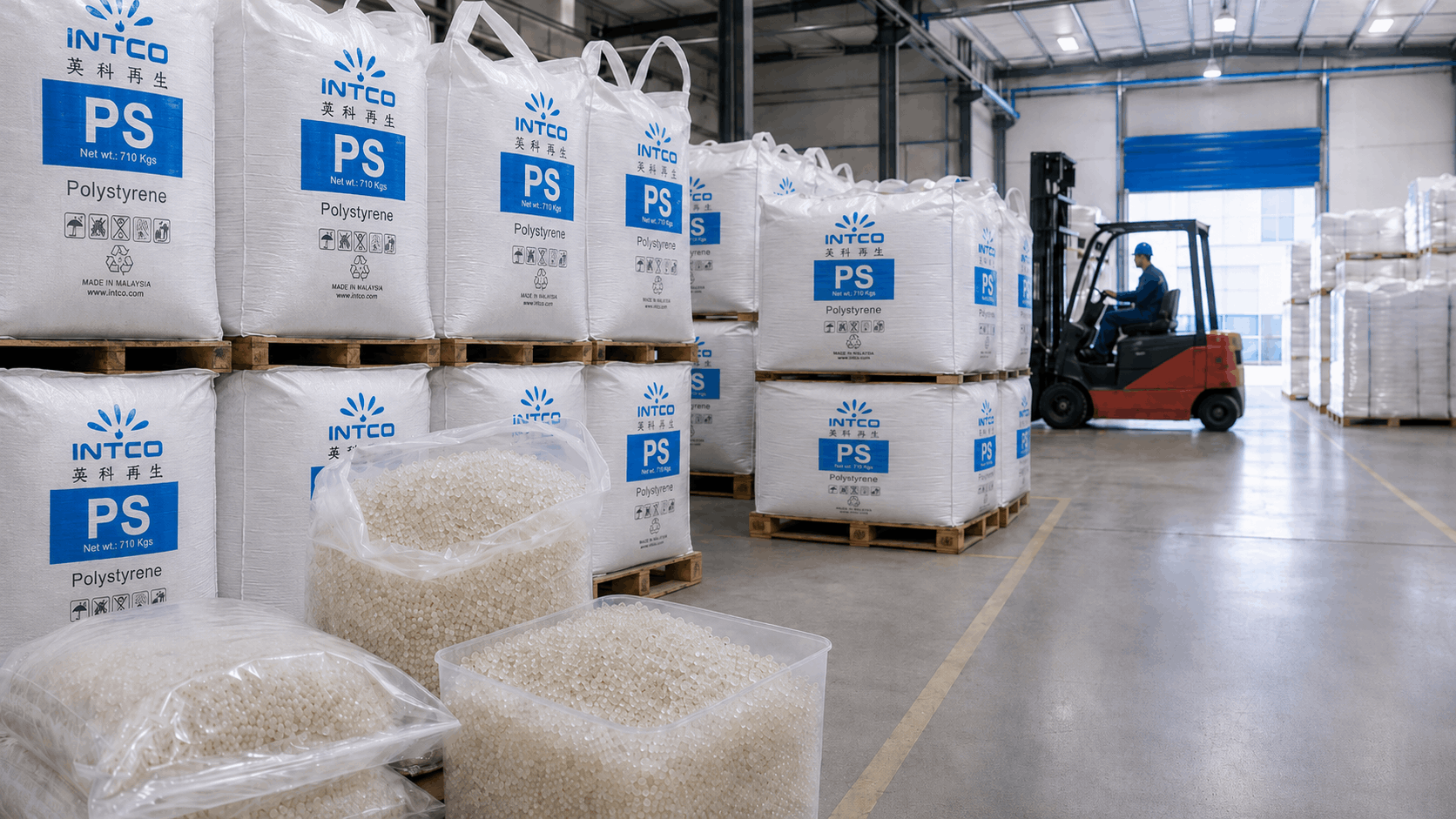
Conclusion
Recycled PS pellets offer foam lunch box manufacturers a practical way to reduce material cost, improve resource utilization and support more circular plastic production. For stable foam lunch box production, the selected material should have consistent melt flow, low impurity content, controlled moisture and ash levels, uniform pellet size and reliable batch quality.INTCO recycled PS pellets provide a useful industry reference because the company publishes clear product categories, application directions and technical data for grades such as r-GPPS V9580. Its listed applications, including foam lunch box, KT board and insulation board, show how recycled PS pellets can be positioned for foam sheet and thermoforming-related industries.
For manufacturers planning to use recycled PS pellets in foam lunch box production, the best approach is to combine supplier evaluation, sample testing, pilot production and compliance review. With the right material grade and process adjustment, recycled PS pellets can become a cost-effective and practical raw material solution for foam lunch box production.